
Researchers views
RESULTS OF THE HRS4R SURVEY SUBMITTED TO UMH RESEARCHERS
The survey was available for four weeks, from 2 to 30 July 2018, and the Vice-rectorate for Research of the UMH sent weekly reminders via e-mail to the researchers involved, whose number by profile is as follows:
| Total Researchers in the UMH | Profile R1 First Stage | Profile R2 Recognised Researcher | Profile R3 Established Researcher | Profile R4 Leading Researcher |
| 693 | 147 | 196 | 244 | 106 |
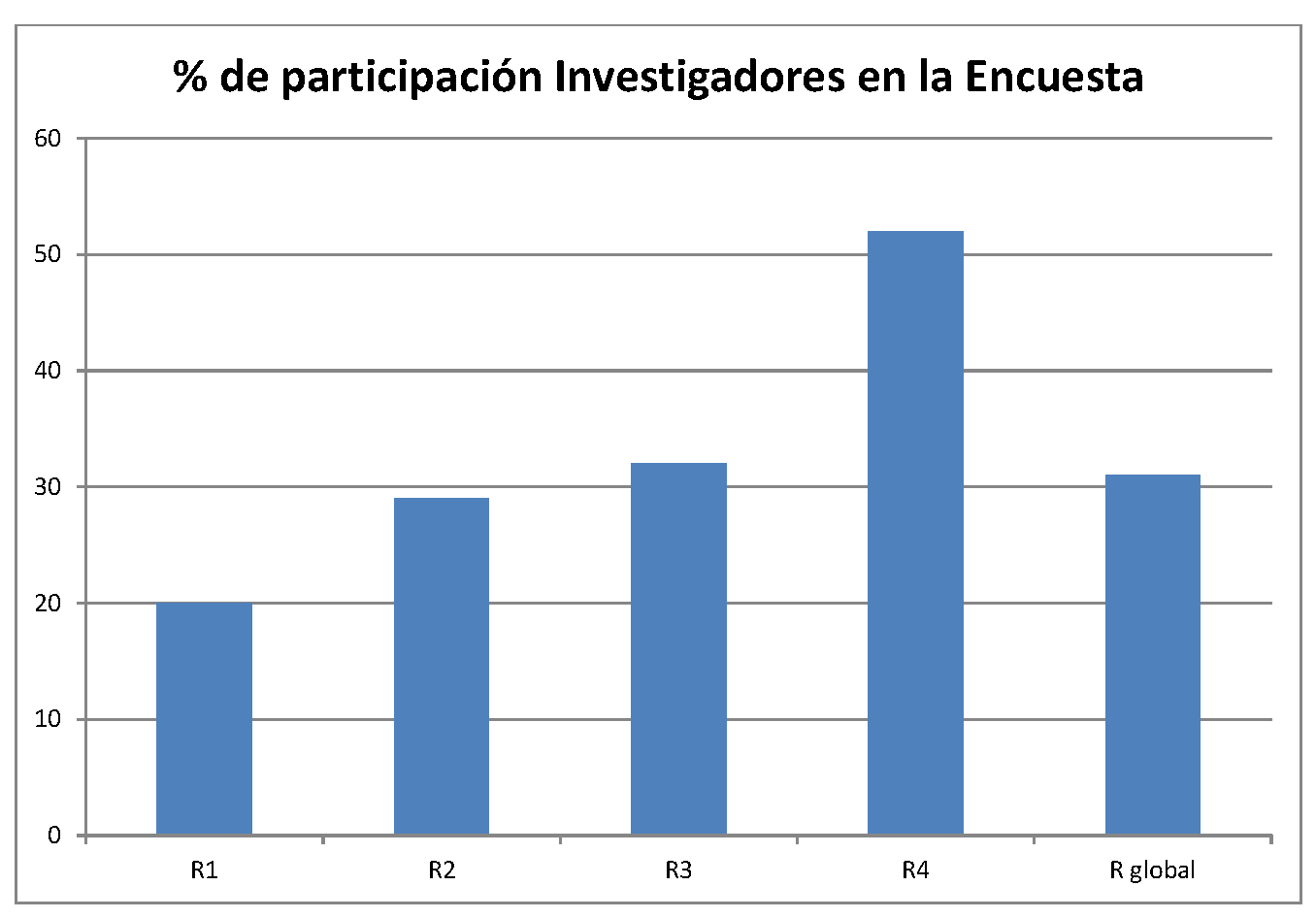
Of the 693 researchers of the UMH, a total 224 filled out the survey, which is a global answer rate of 32%, with the relative answer rate itemised by research categories shown in the following table,
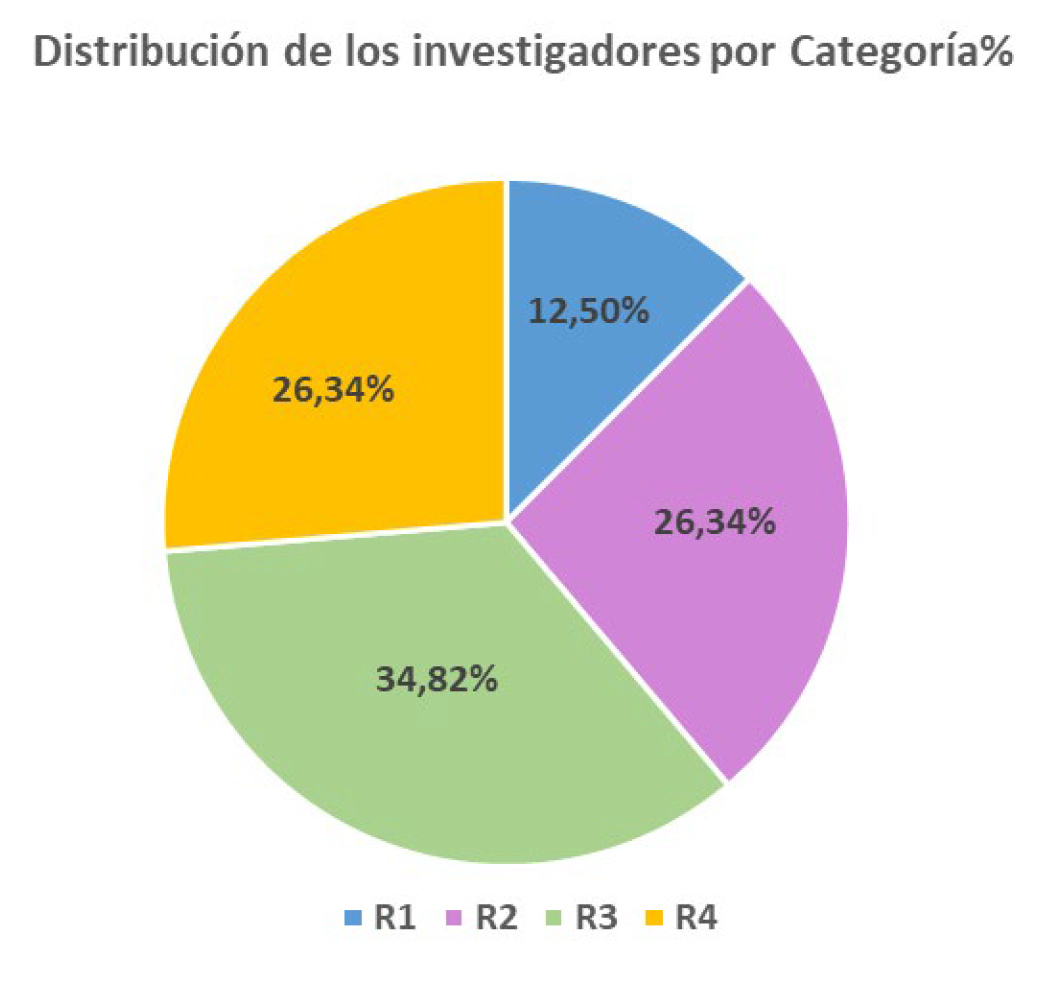
With the number of researchers who took part in the survey being 224, the percentage distribution for each profile is
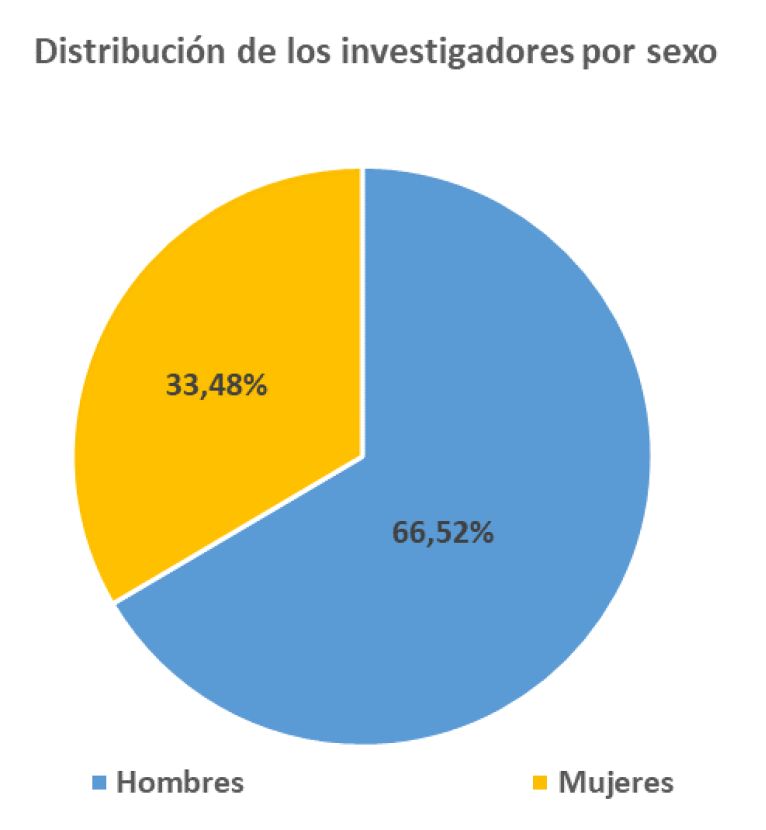
When looking at the percentage of participation among women and men, we see the following distribution
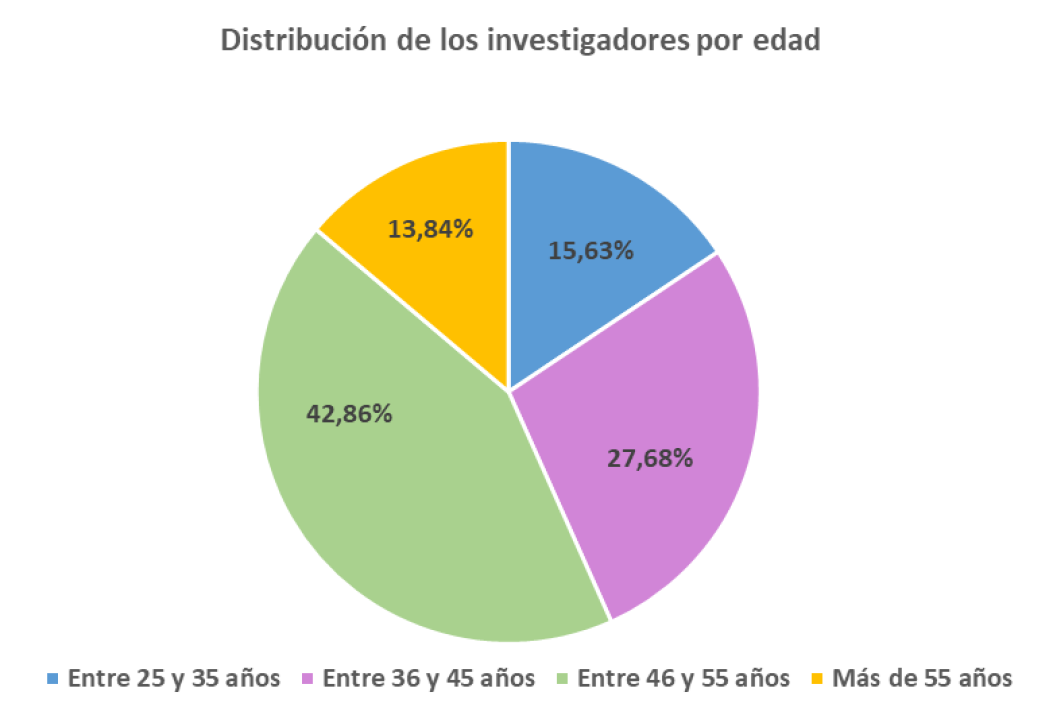
When looking at the participation focusing on the age ranges, we obtain the following figures
Detailed results of the survey on each of the 40 principles of the Charter and Code of the European Commission
*Values obtained of a maximum of 5.0.
| C&C principle | Questions of the C&C survey | R1 | R2 | R3 | R4 | Average score R |
| GROUP I | ETHICAL AND PROFESSIONAL ASPECTS . | |||||
| 1 |
* Freedom of research. Researchers freely guide their research, with the limitations that may arise. |
4,07 | 4,45 | 4,23 | 4,58 | 4.30 |
| 2 | * Ethical principles. Researchers follow the ethical rules included in national, sectoral or institutional ethical codes | 4,50 | 4,69 | 4,57 | 4,59 | 4.60 |
| 3 | * Professional responsibility. Researchers do what they can to ensure their research is meaningful for society. | 4,54 | 4,39 | 4,38 | 4,47 | 4.40 |
| 4 | * Professional attitude. Researchers are aware of the possible funding mechanisms, request the necessary licences and notify the UMH of changes to their projects. | 4,30 | 4,36 | 4,08 | 4,40 | 4.30 |
| 5 | * Contractual and legal. Researchers know the regulation on training and working conditions. | 3,96 | 3,93 | 3,56 | 3,79 | 3.80 |
| 6 | * Responsibility. Researchers who are funded with public funds adhere to the principles of competition, transparency and management efficiency. | 4,36 | 4,42 | 4,43 | 4,56 | 4.40 |
| 7 | * Good research practices. Researchers adopt safe work methods to safeguard health and security. | 4,57 | 4,48 | 4,54 | 4,41 | 4.50 |
| * Researchers know and comply with current legislation regarding data protection and confidentiality. | 4,38 | 4,37 | 4,13 | 4,04 | 4.20 | |
| 8 | * Result dissemination and exploitation. Research results are disseminated and exploited via open access communications or via their commercialisation. | 4,29 | 4,02 | 3,96 | 3,98 | 4.10 |
| 9 | * Public commitment. Researchers ensure their research activities are made known to society as a whole, so they can be understood by non-specialists. | 3,79 | 3,63 | 3,50 | 3,69 | 3.70 |
| 10 | *Non-discrimination. The UMH does not discriminate against researchers based on gender, age, ethnicity, nationality, religion, public opinion, etc. | 4,57 | 4,57 | 4,43 | 4,76 | 4.60 |
| 11 | * Appraisal system. The UMH has a system for appraising professional performance which is periodic and transparent for all researchers. | 4,39 | 4,19 | 4,12 | 4,14 | 4.20 |
| GROUP II | RECRUITMENT AND SELECTION | |||||
| 12 | * Recruitment. The UMH has open and transparent recruitment procedures which are adapted to the position on offer. | 4,54 | 4,42 | 4,17 | 4,09 | 4.30 |
| 13 | * Recruitment (Code). Recruitment. The UMH has efficient recruitment procedures adapted to the position on offer. | 4,29 | 4,24 | 3,91 | 3,95 | 4.10 |
| 14 | * Selection. In the UMH there are specialists with experience and competence in various fields on the candidate Selection Committees. | 4,35 | 4,14 | 3,88 | 3,88 | 4.10 |
| 15 | * Transparency. Candidates are informed of the process and selection criteria before the selection is made. | 4,16 | 4,32 | 4,05 | 4,19 | 4.20 |
| 16 | * Merit assessment. Different scientific production, teaching, transfer, management and dissemination merits are valued in the selection process. | 4,39 | 4,47 | 4,38 | 4,40 | 4.40 |
| 17 | * CV timeline variations. Interruptions during a researcher’s professional career are considered part of the professional evolution, and is not penalised in the selection process. | 3,68 | 3,65 | 3,14 | 3,53 | 3.50 |
| 18 | * Mobility recognition. The UMH sees mobility as a valuable contribution to professional development. | 4,54 | 4,31 | 4,14 | 4,12 | 4.30 |
| 19 | * Qualification recognition. The UMH values and appropriately appraises the academic and professional qualifications of researchers. | 4,37 | 4,16 | 4,03 | 4,19 | 4.20 |
| 20 | * Professional career. The UMH recognises the development of the researcher’s professional career. | 4,36 | 4,07 | 4,03 | 4,07 | 4.10 |
| 21 | * Postdoctoral appointments. The UMH has clear rules on the recruitment of postdoctoral researchers, including the maximum duration and the objectives of their contracts. | 4,27 | 4,14 | 3,99 | 3,74 | 4.00 |
| GROUP III | WORKING CONDITIONS AND SOCIAL SECURITY . | |||||
| 22 | * Recognition of the profession. The UMH recognises all levels involved in a career in research as researchers (from postgraduate). | 4,41 | 4,14 | 4,14 | 4,07 | 4.20 |
| 23 | * Research work environment. The UMH promotes research and learning with resources and opportunities. | 4,32 | 4,19 | 3,87 | 4,09 | 4.10 |
| 24 | * Working conditions. The UMH offers researchers flexibility to reconcile professional and family life to ensure scientific success. | 4,18 | 4,39 | 3,89 | 3,98 | 4.10 |
| * The UMH offers support for people with disabilities to ensure scientific success. | 4,11 | 4,27 | 3,83 | 3,81 | 4.00 | |
| 25 | * Job stability. The UMH ensures researchers have job stability. | 4,11 | 3,91 | 3,76 | 3,54 | 3.80 |
| 26 | * Funding and salaries. The UMH ensures that researchers have appropriate economic conditions and social coverage. | 4,00 | 3,91 | 3,84 | 3,93 | 3.90 |
| 27 | * Equality of opportunities. The UMH offers equal opportunities among genders on all levels of recruitment. | 4,46 | 4,48 | 4,26 | 4,29 | 4.40 |
| 28 | * Professional development. The UMH has a support strategy for the professional development of researchers. | 3,93 | 3,88 | 3,50 | 3,55 | 3.70 |
| 29 | * The value of mobility. The UMH recognises the value of mobility (geographical, cross-sectional, trans-disciplinarian and between the public and private sector) in its appraisal system. | 4,22 | 4,11 | 3,84 | 3,78 | 4.00 |
| 30 | * Access to professional guidance. The UMH offers professional guidance for researchers in their various stages. | 3,89 | 3,55 | 3,28 | 3,51 | 3.60 |
| 31 | * Intellectual property rights. The UMH guarantees the appropriate protection of the intellectual rights of research and development results. | 4,50 | 4,19 | 3,97 | 4,09 | 4.20 |
| 32 | * Co-authorship. The UMH ensures that the rights of researchers of all levels are recognised with the co-authorship of research results. | 4,29 | 4,24 | 3,86 | 3,85 | 4.10 |
| 33 | * Teaching. The UMH values teaching within the appraisal of a career in research. | 3,75 | 3,70 | 3,50 | 3,69 | 3.70 |
| 34 | * Complaints. The UMH has appropriate complaint channels established (such as an ombudsman, or researcher defender) to help all researchers solve conflicts and complaints. | 3,92 | 3,80 | 3,35 | 3,59 | 3.70 |
| 35 | * Participation in decision-making bodies. The UMH allows the participation of researchers in the institution’s information, consultation and decision-making groups. | 3,89 | 3,86 | 3,57 | 3,58 | 3.70 |
| GROUP IV | TRAINING AND DEVELOPMENT | |||||
| 36 | * Relation with supervisors. Researchers in the initial stage of their careers have regular meetings with their supervisors. | 4,33 | 4,21 | 4,09 | 4,22 | 4.20 |
| 37 | * Supervision and management tasks. Senior researchers favour the transfer of knowledge and the development of the career of junior researchers. | 4,26 | 4,07 | 4,09 | 4,20 | 4.20 |
| 38 | * Continuation of the professional development. The UMH promotes the continuous professional development of its researchers during all the stages of their careers, regularly updating and expanding their abilities and competences. | 4,11 | 3,84 | 3,77 | 3,70 | 3.90 |
| 39 | * Continuous professional training. Researchers of all levels have the possibility of undergoing continuous training. | 4,21 | 3,97 | 3,95 | 3,93 | 4.00 |
| 40 | * Supervision. Junior researcher supervisors offer the appropriate support and provide the necessary progress and revision procedures, as well as feedback mechanisms. | 4,30 | 4,14 | 4,08 | 4,12 | 4.20 |
| OPINION | * Additional notes. | |||||
| R1 | R2 | R3 | R4 | Averagescore | ||
| Average score | 4,23 | 4,15 | 3,95 | 4,03 | 4,10 | |
| Of a maximum of 5.0 |
Of the scores obtained in the survey, it can be surmised that the general degree of satisfaction among researchers of the UMH in regard to the principles of the Charter and Code is of 82% (4.1/5.0), a result considered optimal, especially as it is very balanced among the four researcher profiles, R1, R2, R3 and R4. They all have high values of satisfaction, and scores of over 66% (minimum score = 3.28/5.0) are obtained in all questions, in some cases even reaching 91% (maximum score = 4.57/5.0).
| Researcher profile | R1 | R2 | R3 | R4 | Average score Global R |
| Ratio Average score | 4,23 / 5 | 4,15 / 5 | 3,95 / 5 | 4,03 / 5 | 4.10 / 5 |
| Percentage of satisfaction regarding the C&C | 85 | 83 | 79 | 81 | 82% |
An analysis of the researchers’ answers shows us that the average score per question is in all cases clearly more than 2.5, which would be an average score for questions with results between 1 and 5, as the minimum score was 3.5, which was only obtained in one of the 40 principles of the C&C – the one related to professional career development.